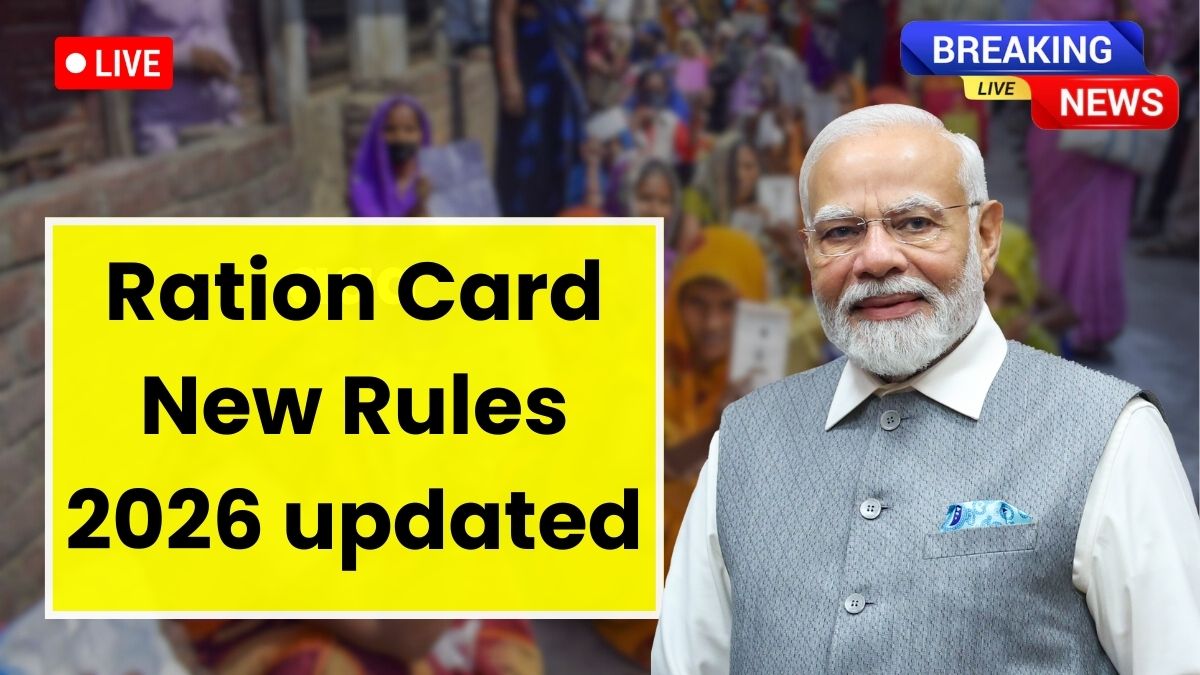
The Government of India has updated ration card rules for 2026 to make the public distribution system stronger, fairer, and more transparent. Ration cards are an essential support for millions of families, as they help people buy food grains and daily essentials at subsidized prices. The new rules focus on making sure that benefits reach only eligible families while reducing misuse and improving efficiency.
Purpose of the New Ration Card Rules
The main aim of the 2026 reforms is to ensure that food subsidies reach genuine and deserving households. Over time, problems like duplicate ration cards, outdated family records, and ineligible beneficiaries weakened the system. To fix this, the government has introduced stricter verification and regular data updates. Families must now verify their personal and family details either online or at local ration offices. If information is incomplete or incorrect, ration benefits may be paused until verification is completed.
Ration Card Categories Remain the Same
Under the new rules, the three existing ration card categories continue. Above Poverty Line ration cards are for families with income above the poverty limit and offer limited subsidies. Below Poverty Line ration cards are meant for low-income families and provide higher subsidies and more food grains. Antyodaya Anna Yojana ration cards are for the poorest and most vulnerable families and offer the highest level of food support at very low prices.

Eligibility and Mandatory e-KYC
Eligibility rules have been refined in 2026. Applicants must be Indian citizens and meet income limits decided by their state government. In some states, income limits have been increased so that more low-income families can qualify. A major change is mandatory Aadhaar-based e-KYC for all family members linked to a ration card. This step helps prevent fake or duplicate beneficiaries. Families who do not complete e-KYC may face suspension of benefits until the process is done.
Documents and Update Process
To apply for or update a ration card, families need documents such as Aadhaar cards, proof of address, identity proof, bank details, and photographs. Some states may also ask for income certificates. Updating details has become easier through online portals or local ration offices. After submission, officials verify the information digitally or through field checks. Once approved, the updated ration card becomes active, ensuring uninterrupted access to benefits.
Impact of Ration Card Reforms 2026
The new rules aim to improve transparency, reduce corruption, and protect food security for eligible families. By using digital verification and updated eligibility norms, the government wants to ensure fair distribution of subsidies and long-term trust in the system.

Disclaimer
This article is for general informational purposes only. Ration card rules, eligibility conditions, and benefits may differ from state to state and can change based on official government notifications. Readers are advised to confirm details through authorized government websites or local ration card offices before applying or updating their ration cards.